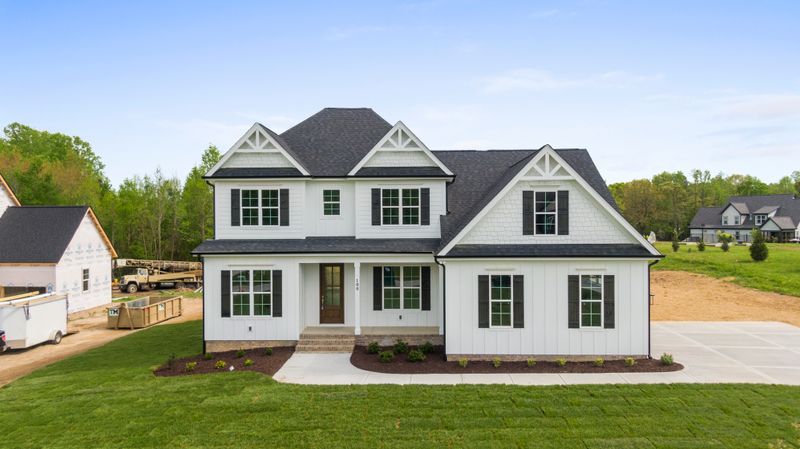
Climate decides your strategy
Your local climate determines the best season to paint, how often you'll repaint, and which products hold up. Humid and coastal regions need mildew- and salt-resistant coatings and careful timing around storms. Hot, sunny climates demand UV-stable, fade-resistant paint and early-morning application. Cold regions have a short season and need flexible coatings that survive freeze–thaw.
This is exactly why our city and state pages tailor exterior advice to where you live — the fundamentals below are universal, but the timing and products should match your conditions.
Pro tip: Check the paint can's temperature range. Most exterior latex needs surfaces and overnight lows to stay above ~50°F for a day or two to cure properly.
Prep makes or breaks exterior work
Outdoor prep is more involved than indoor: pressure-washing to remove dirt, chalk, and mildew; scraping and sanding failing paint; replacing rotted wood; setting and caulking nail holes and joints; and priming all bare wood and metal. Skipping the wash or painting over peeling paint guarantees early failure.
- Wash and let surfaces fully dry — a moisture meter beats guessing.
- Scrape, sand, and feather all loose and failing paint.
- Caulk gaps with a quality elastomeric sealant.
- Prime all bare wood, metal, and stained areas before topcoats.
Choosing the right coating
100% acrylic latex is the workhorse for siding and trim — it's flexible, breathable, and UV-resistant. On stucco and masonry, an elastomeric coating bridges hairline cracks and sheds wind-driven rain. Bare metal needs a rust-inhibitive primer first.
Color matters for longevity, not just looks: deep, saturated colors fade faster under strong sun, so in high-UV regions lighter and mid-tone colors keep their look longer.
Timing and weather windows
Paint when you'll have a stretch of dry, mild days. Avoid painting in direct hot sun (the surface flash-dries and traps lap marks), late in the day when dew will settle on a fresh coat, or right before rain. In many regions, spring and early fall are ideal; in the Pacific Northwest the dry window is mid-summer; in the desert Southwest, the cooler months and early mornings win.
Frequently asked
Typically every 5–10 years depending on climate, siding, and exposure. Coastal, tropical, and high-UV areas are on the shorter end; sheltered, mild climates the longer end.
No. Loose and peeling paint must be scraped and sanded first, then spot-primed. New paint over failing paint will peel with it.
Pros often spray-and-back-roll: spraying lays paint on fast, back-rolling works it into the surface for adhesion. The method matters less than prep and film thickness.